

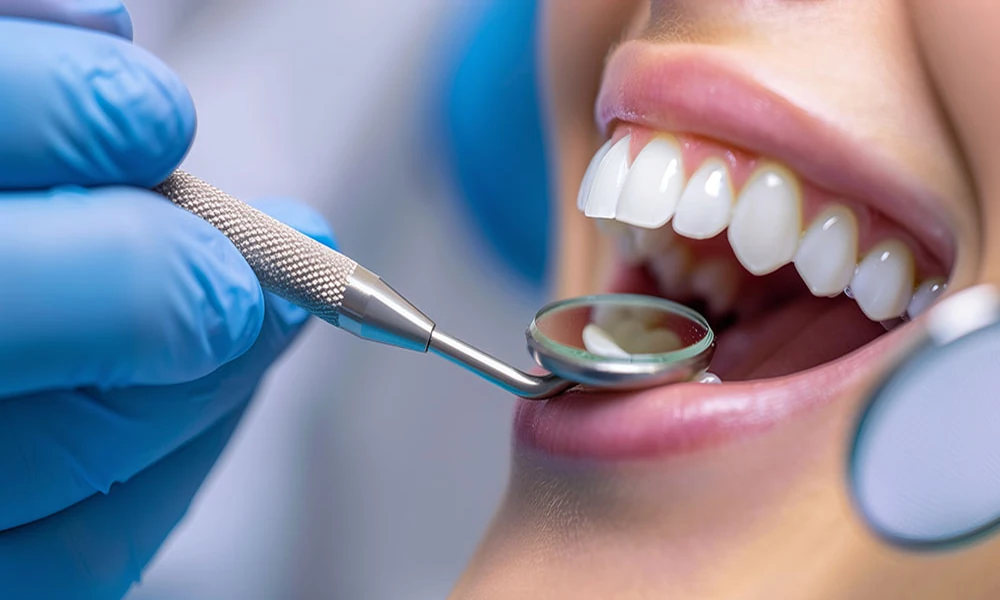
You can have an implant crown that looks strong, feels stable, and still does not look quite right when you smile. That gap between “it functions” and “it looks natural” is often the gumline. If the gum shape around an implant crown is too flat, uneven, bulky, or recessed, the tooth can stand out in a way you did not expect. That is frustrating, especially if you chose treatment to feel more like yourself again. For patients seeking complete smile restoration Roseville, refining the gumline can make the final result look far more natural.
The hard truth is that a good cosmetic result is not just about the crown. The soft tissue around it frames the tooth, controls how light hits the area, and helps the implant blend with the teeth next to it. Implant gum contour affects symmetry, the appearance of tooth length, and whether the final result looks natural or artificial. In general and cosmetic dentist care, this is where planning matters most.
Gum shape around a dental implant crown changes the entire smile line
Natural teeth do not rise straight out of the gums like pegs. The gumline curves, the papilla fills the space between teeth, and the tissue has thickness and support. An implant does not copy that on its own. The crown sits on a fixture, but the surrounding tissue still has to be shaped and supported.
When that tissue shape is off, the eye catches it fast. You may see a dark triangle between teeth, a crown that looks longer than the one next to it, or a flat gumline that makes the implant look separate from the rest of the smile. This happens most often in the front of the mouth, where even small differences show in photos and conversation.
Research on esthetic outcomes around implants keeps pointing back to soft tissue form and stability. Studies discussing peri implant soft tissue management show that tissue thickness, papilla support, and contour are tied closely to patient satisfaction and visible esthetics. You can read more in this review on peri implant soft tissue esthetics.
Flat or uneven tissue around implant crowns creates cosmetic problems that are hard to hide
You might assume the crown can simply be remade if it does not look right. Sometimes that helps, but a crown cannot fully fix missing gum volume or poor tissue architecture. If the tissue is thin or receded, the crown may need to be shaped in a way that hides the defect, and that can leave the tooth looking too wide or too long.
This is where people often feel stuck. They paid for an implant, they were told it healed well, and yet the result still looks off. The problem may not be failure of the implant itself. It may be the soft tissue frame around it. That distinction matters because the next step is different. Instead of replacing hardware, the focus may need to shift to gum sculpting, provisional crown shaping, or tissue grafting.
Gum contour around implant crown also affects cleaning. A bulky emergence profile or compressed tissue can trap plaque and make flossing harder. That raises the risk of inflammation, bleeding, and bone loss over time. Cosmetic and health issues often show up together in this area, which is why appearance should never be treated as a shallow concern.
Soft tissue planning often determines whether an implant crown looks natural
The best cosmetic implant cases are usually built in stages. The implant has to be placed in the right position, but the tissue also needs support during healing. In many cases, a temporary or provisional crown is used to guide the gum into a more natural shape before the final crown is made. That step can create a cleaner scallop and better papilla fill.
Some patients also need soft tissue grafting, especially when the gums are thin or the site lost volume after an extraction. A thicker tissue biotype tends to be more stable and more forgiving. Clinical discussions on immediate implants and esthetic outcomes also show how much tissue preservation and contour management affect the final look. This published review on implant esthetics and tissue management gives useful context.
This is the part many people never hear at the start. A beautiful implant crown is not just made in the lab. It is shaped by healing, tissue support, and careful adjustments over time.
Common cosmetic implant concerns and what usually helps
| Concern | What You May Notice | Common Cause | Possible Fix |
|---|---|---|---|
| Dark triangle | Open space between implant crown and nearby tooth | Loss of papilla support or bone height | Provisional crown contouring, tissue grafting, restorative redesign |
| Long looking crown | Implant tooth appears taller than the matching tooth | Gum recession or low tissue level | Soft tissue grafting, crown adjustment, site evaluation |
| Flat gumline | Smile looks less natural around the implant | Poor tissue shaping during healing | Customized healing abutment or provisional reshaping |
| Bulky crown at the gum | Tooth feels hard to clean or looks too round | Crown compensating for missing tissue volume | Contour revision, hygiene changes, tissue augmentation |
| Gray shadow at gumline | Metal or implant structure shows through tissue | Thin gum tissue | Soft tissue thickening, material review, esthetic revision |
Small steps now can protect your cosmetic dental result later
Ask for a tissue focused exam. If your implant crown looks off, ask your dentist to evaluate the gum shape, tissue thickness, papilla fill, and crown emergence profile. A simple “is the implant healthy” check is not enough when the concern is cosmetic.
Request photos and side by side comparisons. In cosmetic dental care, pictures show details that are easy to miss in the chair. Ask to compare your implant crown with the matching natural tooth and the neighboring gumline. This helps spot asymmetry, recession, and contour problems clearly.
Discuss staged correction instead of a quick remake. If the issue is soft tissue related, remaking the crown alone may waste time and money. Ask whether a provisional crown, contour adjustment, or grafting would create a better foundation before the final restoration is changed.
The right gumline makes a dental implant crown disappear into your smile
The goal is simple. Your implant crown should not call attention to itself. The shape of the gums around it is a major reason that happens or does not. When the tissue is balanced, supported, and easy to clean, the result tends to look more natural and last better.
If you are unhappy with how an implant crown looks, trust that reaction. You are not being picky. In many cases, the concern is real, visible, and treatable. A general and cosmetic dentist can assess the soft tissue frame, the crown contour, and the options for improving both function and appearance.
