

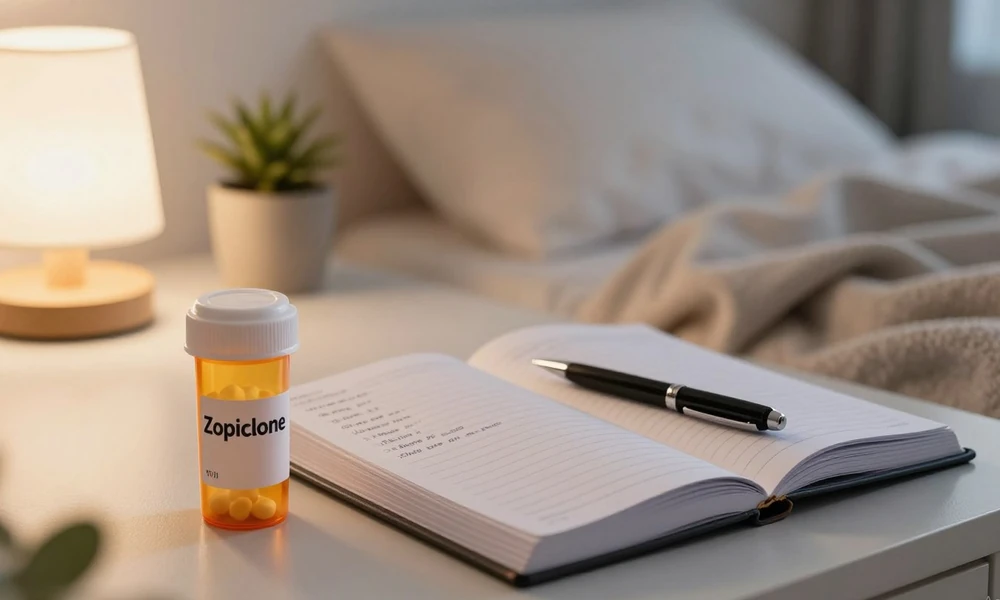
Zopiclone is a prescription medicine for short-term insomnia treatment. If poor sleep is affecting your days, you may want relief, but a sleeping medicine needs careful use. Taking it safely means following the prescriber’s instructions.
Sleep hygiene, such as keeping regular bedtimes, can support better rest. It is not a substitute for medical advice when sleep problems persist or disrupt daily life. A GP can help assess possible causes and discuss suitable care.
Using a medicine without advice, or changing how you take it, can bring avoidable risks. The right choice depends on your health and other medicines, as well as the pattern of your sleep difficulty.
The sections that follow explain what zopiclone is meant to do, how it affects sleep and why clinicians use it only in selected situations.
Zopiclone is prescribed to help adults with short-term insomnia, especially when poor sleep is severe or disruptive. It can help with sleep onset and staying asleep, but it does not fix every cause of insomnia. The medicine is a short-term aid, not a cure for the problems behind sleeplessness.
What is zopiclone used for?
People ask what is zopiclone used for when sleep problems become hard to manage. A prescriber may offer it to an adult who struggles to fall asleep, wakes often during the night, or gets too little sleep.
By improving sleep onset and reducing night waking, it may help increase sleep duration. A clinician considers whether this benefit is likely to matter in daily life, not just whether one night has gone badly.
Insomnia can have causes that a sleeping medicine does not address. Pain, stress, a health condition or another medicine may affect sleep, so a clinician may first look at those factors.
How does zopiclone help with sleep?
Zopiclone is a prescription-only, non-benzodiazepine hypnotic in the Z-drug class. A Z-drug is a non-benzodiazepine medicine that acts on GABA signalling and is used as a hypnotic.
It enhances GABA signalling in the brain. GABA is a chemical messenger that helps reduce nervous system activity, and this calming effect can promote sleep.
The medicine supports the body’s ability to fall asleep, but it is not a treatment for the underlying causes of insomnia. Because of its limits and risks, clinicians reserve it for selected situations rather than routine or long-term use.
When Is Zopiclone Prescribed for Insomnia?
A prescriber may consider zopiclone when insomnia is severe and short-term relief seems necessary. The decision depends on the effect on daily life, your health and other medicines. Poor sleep alone does not automatically mean this medicine is suitable.
A clinician may ask how often sleep problems happen and how long they have lasted. They may also ask how tiredness affects work, school, driving or caring for others.
Your medical history can change the balance of benefit and risk. A prescriber may need to consider other health conditions, past problems with medicines and any treatment already tried.
Other medicines matter too, since some can increase sedation or interact with zopiclone. A pharmacist or prescriber can review the full list, including medicines bought without a prescription.
A clinician may decide against prescribing it if dependence risk is a concern, if an interaction could cause harm, or if another issue needs attention first. For example, ongoing pain or anxiety may need its own assessment.
Insomnia treatment can also focus on habits and conditions that keep sleep poor. A medicine may offer brief relief, but it will not necessarily resolve a cause that remains in place.
When prescribed, zopiclone is intended for short-term use, usually for 2-4 weeks at most. That period includes any dose reduction. The limited course helps keep exposure brief, and the next concern is following the prescription safely.
How Should You Take Zopiclone, and What If It Is Not Working?
Check the pharmacy label, then take only the prescribed dosage just before bed. Take it only when you can allow a full night for sleep. The label and prescriber’s directions always come first.
How long does zopiclone 3.75 take to work?
Zopiclone often begins to work within about an hour. The usual adult dose is 7.5 mg immediately before bed, while a 3.75 mg dose is commonly prescribed for older adults or people with liver or kidney problems.
The lower dose does not guarantee a different onset time. How quickly someone feels sleepy can vary, so do not take another tablet because the first one seems slow to work.
Follow the dose written on your own prescription. Never use someone else’s tablets or change your dose based on another person’s experience.
What should you do if zopiclone is not working?
If zopiclone seems ineffective, do not take an extra dose or increase the prescribed dosage. Do not repeat it during the night. Taking more can increase harm without safely solving the sleep problem.
Do not add another sleeping medicine unless a prescriber has told you to do so. Combining medicines without advice can make their effects harder to predict.
Instead, contact the prescriber and explain what is happening. They can review how you take it, possible causes of poor sleep and whether the treatment plan needs to change.
Keep to the agreed course while waiting for advice, unless a clinician tells you otherwise. Safe use also means noticing unwanted effects, even when you have followed the label.
What Side Effects Can Zopiclone Cause?
You may notice a bitter or metallic taste after taking zopiclone. Other common zopiclone side effects include dry mouth, headache, dizziness and daytime drowsiness. Even if you feel mostly awake, your alertness may still be impaired.
Which side effects are common?
A metallic taste or bitter taste is a known effect, and dry mouth can also occur. Some people feel dizzy or develop a headache after taking the medicine.
These effects can be uncomfortable, even when they are not severe. Tell your doctor or pharmacist if they persist, trouble you or make daily tasks harder.
Rarely, a person may carry out complex sleep behaviours without being fully awake. These can include sleepwalking, sleep-driving or preparing food during the night.
Stop taking zopiclone and contact a doctor promptly after any complex sleep behaviour. You may not remember what happened, so take reports from someone who saw it seriously.
What can happen the next day?
Next-day drowsiness can slow reactions and affect judgement. Zopiclone side effects next day may make driving unsafe, even if you feel mostly alert.
Allow at least 12 hours after taking zopiclone before driving or operating machinery. Do not rely on a quick test of how awake you feel.
A severe allergic reaction is different from common discomfort. Get urgent help for swelling of the face or throat, a serious rash, or breathing difficulty.
Breathing difficulty also needs urgent attention for other possible reasons. While common effects can affect comfort and alertness, using zopiclone for daytime anxiety raises a separate concern.
Can You Take Zopiclone During the Day for Anxiety?
Do not take zopiclone during the day for anxiety unless a prescriber has specifically directed you to do so. Zopiclone is a sleep medicine, not a daytime anxiety treatment. Its sedating effect can seriously affect alertness and coordination.
Feeling calmer after a sedating medicine does not make it a suitable anxiety treatment. It can make it harder to think clearly, move safely or respond quickly.
Do not take another person’s tablets or change the timing on your own. A prescription is based on one person’s health and treatment plan, not a general need for calm.
If anxiety keeps troubling you, speak with a GP or prescriber. They can assess what may be causing it and discuss treatments that suit your needs.
The risks become greater when zopiclone is combined with other substances that slow the nervous system. Alcohol and some medicines can make sedation much more dangerous.
What Happens If You Take Zopiclone and Alcohol?
Mixing zopiclone and alcohol can make sedation dangerously stronger. Do not drink alcohol while taking zopiclone. The effects can be hard to predict, even if you drink only a small amount.
Alcohol can increase sleepiness and reduce awareness. It can also make it harder to wake or respond if something goes wrong.
Opioids and other central nervous system depressants can also add to the sedative effect. This group includes some medicines used for pain, anxiety or sleep.
Combining zopiclone with opioids or other sedatives can cause severe impairment and breathing suppression. Slow or difficult breathing is an emergency.
Before taking zopiclone with any other medicine, contact a pharmacist or prescriber. Include prescribed medicines, over-the-counter products and any treatment started recently.
If someone is hard to wake, or has slow or difficult breathing, call 999. Stay with them and follow the emergency operator’s instructions.
These serious effects are one reason not to change how you take zopiclone without advice. Continuing use or raising the dose without guidance can bring other risks.
Can Zopiclone Cause Dependence or Withdrawal?
If the same dose seems to have less effect, tolerance may be developing. Do not take more than prescribed to try to restore its effect. The change may feel frustrating, but a higher dose is not a safe answer.
Tolerance means the body responds less to a medicine than it did before. Physical or psychological dependence can also develop, especially with prolonged or unauthorised use.
Dependence may mean feeling unable to sleep without the medicine, or feeling driven to keep taking it. This is not a reason for shame, but it is important to discuss honestly with a clinician.
Stopping after regular use can lead to withdrawal symptoms. These may include rebound insomnia, anxiety, restlessness or other changes in how you feel.
Do not stop suddenly after regular or prolonged use without speaking to a clinician. A clinician can advise whether a gradual reduction is needed and how to do it safely.
Seek medical advice if sleep becomes worse after stopping or if new symptoms appear. Do not restart, increase or reduce the medicine on your own.
Medical guidance can help manage dependence and withdrawal while addressing the reason sleep became difficult. Non-medicine approaches may also offer support.
What Are Safer Alternatives to Zopiclone?
Cognitive behavioural therapy for insomnia (CBT-I) and addressing contributing causes are common alternatives to discuss with a clinician. CBT-I is a structured treatment for insomnia, not a sleeping pill. It looks at thoughts and behaviours that keep sleep difficult.
How can CBT-I help with insomnia?
CBT-I can help you understand patterns that affect sleep and build new ways to respond to them. A trained professional may guide you through steps suited to your sleep difficulties.
The approach can include changes to time in bed, routines and beliefs about sleep. A clinician can help decide whether CBT-I fits your needs and how to access it.
It may also be useful to assess factors that keep insomnia going. Pain, stress, mood problems or another health condition can all call for attention.
Which non-medicine sleep habits are worth trying?
Sleep hygiene means habits that support regular sleep. Keep a steady time for going to bed and getting up, including at weekends where possible.
A wind-down routine can help mark the shift from busy activity to rest. You might choose a quiet activity and keep the bedroom calm and comfortable.
Limiting caffeine later in the day may help, since caffeine can make it harder to fall asleep. Notice whether tea, coffee, cola or energy drinks affect your own sleep.
Another medicine may suit some people, but a clinician needs to assess the person and the cause of insomnia first. No sleeping aid is the safest choice for everyone.
An over-the-counter or herbal label does not prove a product is safe or free from interactions. Ask a pharmacist before using one with other medicines.
Once you have discussed treatment choices, check any online pharmacy carefully before buying prescription medicine.
How Can You Check a UK Online Pharmacy Before Buying Zopiclone?
Before you buy zopiclone UK sellers offer online, check whether the pharmacy requires a valid prescription and can be independently verified. Check the current GPhC register before ordering. A website’s own claims are not proof of its status or products.
The named case-study website, buy-zopiclone-uk.org, presents itself as a GPhC-registered online pharmacy. It advertises genuine zopiclone tablets, secure ordering and fast, discreet UK delivery.
Those statements are the seller’s claims, not independently verified facts. Check the current General Pharmaceutical Council register and make sure the listed details match the site.
A legitimate process should require a valid prescription for zopiclone. A site that supplies prescription medicines without appropriate clinical checks should be avoided.
Ask a pharmacist or prescriber if you are unsure whether an online service is suitable. They can help you consider whether the medicine fits your needs and how to obtain it safely.
Searches such as “buy zopiclone online UK” can bring up offers that look alike but may not provide the same checks. Do not rely on a polished website or a delivery promise alone.
A safe purchase decision starts with independent checks, not promotional wording. If any part of the process is unclear, pause and speak to a pharmacist or prescriber first.
Conclusion
Zopiclone may help short-term insomnia, but it needs careful use under a prescription. Take it only as prescribed, and do not mix it with alcohol.
Before starting, changing or stopping treatment, speak to a GP or pharmacist. They can help you weigh the likely benefit against your health needs and other medicines.
If you have questions about your own medicine, contact your prescriber or pharmacist.
FAQ
Q: What is a safer alternative to zopiclone?
A: CBT-I is a commonly recommended non-medicine option for insomnia. It helps address thoughts and behaviours that can affect sleep, with steps tailored to the person. Another medicine may suit some people, but no option is right for everyone. A clinician can assess the cause of sleep problems and discuss suitable care.
Q: What drugs cannot be taken with zopiclone?
A: Opioids and other sedatives should not be combined with zopiclone unless a clinician has assessed the risks. These medicines can increase sedation and may affect breathing. Other prescribed and over-the-counter products can also interact. Check every medicine with a pharmacist or prescriber before taking it alongside zopiclone.
Q: Why won’t doctors prescribe zopiclone?
A: A clinician may judge that zopiclone is unsuitable because of dependence risk, interactions or an underlying cause of insomnia. They may also consider a person’s health, other medicines and how sleep problems affect daily life. Poor sleep alone does not mean a sleeping medicine is the right treatment. Ask what options fit your circumstances.
Q: Is zopiclone a high risk drug?
A: Zopiclone can cause impairment, dependence and dangerous interactions, but risk varies by person, dose and duration. Alcohol, opioids and other sedatives can make its effects more harmful. Taking more than prescribed also raises risk. Follow the prescription and ask a clinician about concerns linked to your health or other medicines.
Q: What is the safest sleeping pill?
A: There is no single sleeping pill that is safest for everyone. The best choice depends on health, other medicines and what is causing sleep problems. Some people may benefit more from CBT-I or care for an underlying condition. A GP or pharmacist can help you weigh options rather than choosing by name alone.
Q: What are the top 3 sleeping pills?
A: There is no useful universal ranking of the top three sleeping pills. A medicine that suits one person may be unsafe or ineffective for someone else. Clinicians consider the cause and severity of insomnia, health conditions and other medicines. Ask a prescriber which options fit your situation, including non-medicine treatments.
Q: What is a good sleeping pill that’s not addictive?
A: No sleeping pill can be promised to be risk-free or non-addictive for every person. The risks depend on the medicine and the person taking it. CBT-I is a non-medicine option that may help with insomnia, while other treatments need individual advice. Discuss ongoing sleep problems with a clinician before trying a new product.
Q: What is the healthiest sleeping aid?
A: A steady sleep routine and CBT-I may help without medicine. Regular sleep and wake times, a calm wind-down routine and less late-day caffeine can support rest. Persistent insomnia still deserves assessment, since pain, stress or health conditions may contribute. A GP can help identify causes and discuss care that fits your needs.
