

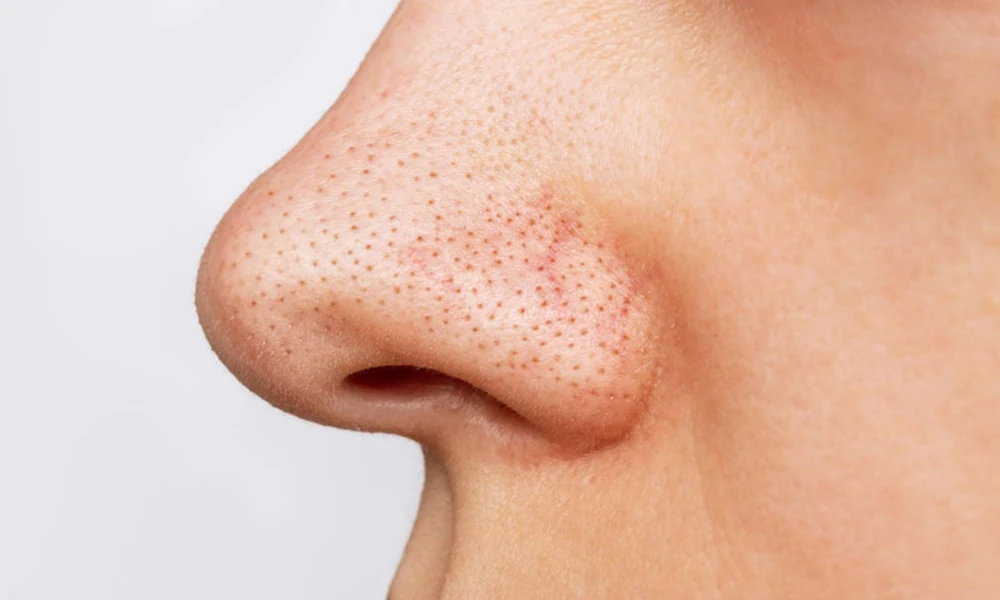
Why does the nose often look darker than the cheeks, even on a face that is otherwise even-toned? The nose is the highest point of the face, so it catches the most direct sunlight. It is also the most handled part of the face: rubbed, squeezed, pressed by spectacles and covered by masks. Those two facts explain most cases, and they also explain why nose pigmentation removal usually needs a combination of sun protection, the right skincare and, for stubborn patches, a clinic procedure. This article walks through the causes, the options and the timelines you should realistically expect.
Common causes of a dark nose
| Cause | What it looks like | Typical trigger |
|---|---|---|
| Sun tan | Uniform brownness on the bridge and tip | Daily sun without sunscreen, two-wheeler commutes |
| Post-inflammatory hyperpigmentation (PIH) | Brown spots or a blotchy patch | Healed pimples, blackhead squeezing, waxing or threading |
| Friction pigmentation | Dark bands on the sides of the nose | Spectacle pads, tight masks, constant rubbing |
| Melasma | Soft-edged brown patch, often also on cheeks and upper lip | Hormones, pregnancy, sun, some medicines |
| Blackheads and sebaceous filaments | Tiny dark dots in pores | Oil build-up, not true pigment |
| Seborrhoeic dermatitis | Dark, slightly scaly, greasy skin in the nose folds | Yeast overgrowth, stress, winter |
Getting the cause right matters because blackheads need exfoliation and oil control, seborrhoeic dermatitis needs an antifungal, and melasma can actually worsen with aggressive lasers. If you are unsure whether you are dealing with simple tanning or pigmentation on nose folds that may be melasma, a dermatologist can tell the difference in minutes with a magnifying lamp.
Step one: stop the trigger
No procedure holds if the trigger continues, so start here.
- Apply a broad-spectrum sunscreen of SPF 30 or higher with a PA+++ rating every morning, and reapply in the afternoon if you are outdoors. The nose is the first place people miss.
- Wear a cap, visor or helmet visor on two-wheelers; Indian commuting sun is a major cause of a tanned nose.
- Stop squeezing blackheads and pimples. Every squeeze risks a brown mark that lasts months.
- Adjust spectacle nose pads so they do not dig in, and choose softer silicone pads.
- Wash the face gently; scrubbing a dark nose does not remove pigment and often deepens it.
Step two: skincare that genuinely helps
Over-the-counter options with reasonable evidence include niacinamide (4-5 percent), vitamin C serum in the morning, azelaic acid, kojic acid and alpha arbutin. At night, a retinoid cream started slowly (two or three nights a week) speeds up cell turnover and fades marks over months. Use one or two actives at a time, not all of them, and introduce each gradually.
Avoid steroid-containing fairness creams sold without prescription. They may lighten the skin for a few weeks and then cause thinning, redness and rebound darkening that is far harder to treat. Lemon juice, toothpaste and baking soda, popular in home remedies, irritate the skin and commonly make marks darker.
Step three: clinic options for stubborn patches
When skincare alone plateaus after three to four months, a dermatologist may suggest one of the following, depending on the cause.
- Chemical peels: glycolic, lactic, mandelic or combination peels lift superficial pigment and clear blackheads. Usually four to six sessions, two to four weeks apart. Indicative cost INR 1,500-4,000 per session.
- Q-switched or picosecond lasers: effective for sun tan, freckles and superficial PIH; used cautiously for melasma in low-energy “toning” mode. Typically INR 3,000-8,000 per session, several sessions needed.
- Depigmenting masks: an in-clinic mask such as a Cosmelan-type treatment followed by a home maintenance cream, mainly used for melasma. Indicative cost INR 15,000-30,000 for the full programme.
- Medicated creams on prescription: a doctor may prescribe a short course of a combination cream for melasma, with strict supervision.
- HydraFacial or microdermabrasion: helpful when the darkness is mostly dead skin and blocked pores rather than true pigment.
These figures are approximate and vary by city, clinic and case. The exact price will be given by the treating doctor after examining the skin. Clinics that offer a range of skin lightening treatments will normally start with a consultation to match the procedure to the type of pigment rather than selling the strongest option first.
Realistic timelines
- Sun tan: four to eight weeks of strict sunscreen and a mild exfoliant.
- PIH from pimples: three to six months with skincare; faster with peels.
- Friction pigmentation: improves only after the rubbing stops, then two to four months.
- Melasma: slow, often six months or longer, and it tends to return without ongoing sun protection. Maintenance is part of the plan, not a failure of treatment.
Photographs taken under the same light every four weeks are a fairer judge of progress than the mirror.
When to see a doctor rather than wait
Book an appointment if a dark patch is growing, has an irregular or changing border, is only on one side, bleeds, itches or is raised. These features need a proper examination to rule out other skin conditions before any nose pigmentation removal is attempted. Also see a doctor if pigmentation appeared after starting a new medicine, or if you are pregnant and the patch is spreading, since treatment choices are more limited in pregnancy.
A dark nose is one of the most common and most treatable pigment complaints in India. With consistent sun protection, patient skincare and the right procedure chosen for the right cause, most people see steady improvement, provided the trigger is removed first.
Disclaimer: This article is for general information only and is not a substitute for medical advice. Please consult a qualified dermatologist before starting any pigmentation treatment, especially during pregnancy or if a patch is changing.
